Play Anywhere: How Digital Board Games Are Changing the Game
- shahmeerarshad008
- Aug 29, 2025
- 5 min read
Table of Contents

Introduction
For centuries, board games have been at the heart of human interaction. From rolling dice in ancient Mesopotamia to gathering around a table for Chess, Checkers, or Monopoly, these games have served as entertainment, education, and cultural tradition. But as technology evolves, so do our games.
In recent years, digital board games have surged in popularity, transforming the way we play. No longer confined to physical boards and pieces, players can now enjoy immersive, portable, and interactive experiences on tablets, smartphones, or specialized digital boards.
The appeal of digital board games lies in their flexibility. Whether you’re playing solo, connecting with friends across continents, or introducing children to strategic thinking through fun play, digital formats make board games more accessible than ever. Some platforms even integrate rollable digital boards that combine the tactile feeling of traditional play with the versatility of digital design—blurring the line between classic and modern gaming.
The Evolution of Board Games into the Digital Era
Board games have always adapted to cultural and social changes. Just as printing presses in the 15th century popularized games like playing cards and checkered boards, today’s digital revolution has brought them into the virtual world. Early digital board games appeared as simple PC versions of classics like Chess or Backgammon, but they were often limited in interaction and visual appeal.
Fast forward to today, and digital board games have become far more sophisticated. They feature beautiful animations, AI opponents, online matchmaking, and even augmented reality (AR) elements. Now, games that once required bulky boards and multiple players in the same room can be played seamlessly anytime, anywhere.
Benefits of Digital Board Games
1. Accessibility and Convenience
One of the biggest advantages of digital board games is their accessibility. Players no longer need to carry around multiple boxes or keep track of dozens of tiny pieces. A smartphone or tablet can house hundreds of games, instantly available at the tap of a finger.
2. Global Connections
Traditional board games relied on people being in the same room. Digital versions remove that limitation, allowing you to play with friends or strangers across the globe. This creates communities that are diverse, dynamic, and always active.
3. Learning and Education
Digital board games are being embraced in classrooms and learning environments. Teachers use them to enhance problem-solving, memory, and teamwork. Many educational board games have digital versions that track progress, making learning measurable and engaging.
(👉 You can check how games strengthen learning in our blog on board games in education).
4. Stress Relief and Mental Health
Just like traditional games, digital board games can improve mental well-being. They provide a space to relax, focus, and enjoy meaningful interaction. In fact, research suggests that playing games reduces stress and strengthens cognitive skills, a topic explored in our post on board games for mental health.
Popular Digital Versions of Classic Games
Some of the oldest and most loved board games now thrive in digital format:
Chess – With online platforms offering ranked matches, AI trainers, and tournaments, Chess has never been more engaging.
Go – This ancient strategy game now has powerful apps where players can challenge global opponents or practice with AI.
Checkers and Backgammon – Digital versions allow instant play with anyone, anywhere.
Othello (Reversi) – Still easy to learn but difficult to master, now available with advanced digital matchmaking.
Beyond classics, newer digital-only creations have emerged, offering unique gameplay mechanics that wouldn’t be possible in physical form.

The Rise of Innovative Digital Platforms
While apps and online platforms dominate, there’s a new wave of innovation: rollable digital board games. Unlike static screens, these devices mimic the feel of a traditional tabletop, yet they can host dozens of different games at once. Imagine rolling out a sleek, flexible digital surface on your dining table and instantly switching between Chess, Ludo, Go, or even ancient cultural games like Baghchal and Nine Men’s Morris.
This approach combines the tactile social feel of traditional board gaming with the limitless potential of digital libraries—an exciting direction for the future of play.
How Digital Board Games Build Skills
Many parents and educators worry that digital gaming distracts kids from learning. But when it comes to digital board games, the opposite is true. Studies and practical experiences show they sharpen critical skills:
Strategic Thinking – Games like Go, Chess, and Lines of Action challenge players to think multiple steps ahead.
Collaboration – Cooperative digital board games encourage teamwork and communication.
Cultural Appreciation – Access to traditional games like Patolli (Aztec), Hnefatafl (Viking), or Seega (Egyptian) helps players connect with history.
Cognitive Skills – Pattern recognition, memory retention, and logical reasoning are consistently improved.
Digital vs. Traditional: A Healthy Balance
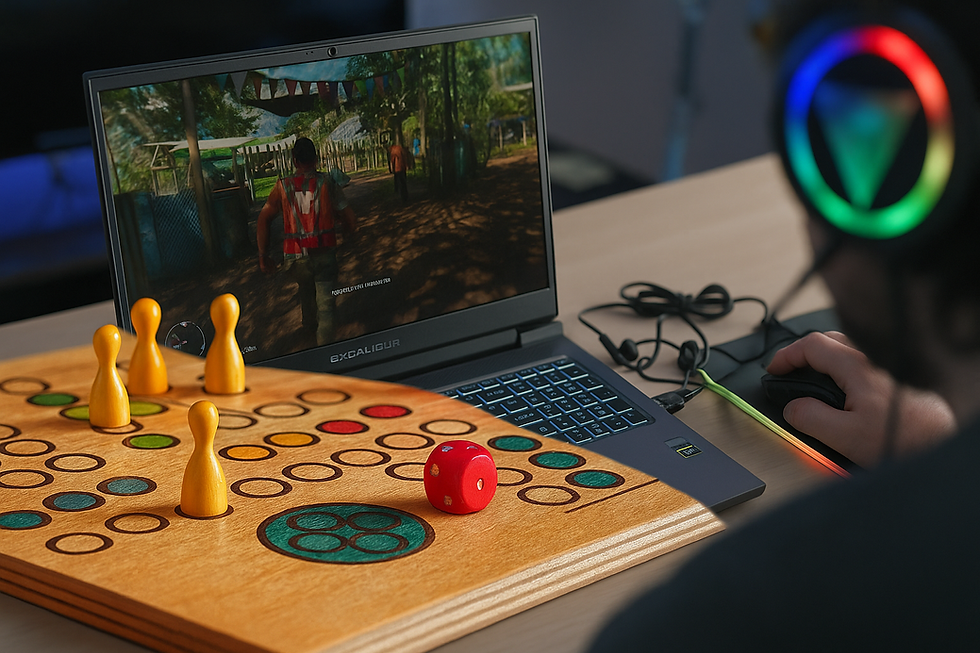
A common debate is whether digital versions are “better” than physical board games. The truth is, both have their place. Physical games foster face-to-face bonding, tactile interaction, and nostalgia. Digital games offer accessibility, portability, and scalability. Many players now enjoy a hybrid lifestyle—playing traditional games at gatherings but using digital platforms when distance or convenience demands it.
Future of Digital Board Games
The future looks promising. Advances in augmented reality, artificial intelligence, and flexible display technology mean digital board games will continue to evolve. Imagine AR glasses projecting a lifelike Chessboard on your table, or AI mentors guiding kids as they play ancient strategy games. With rollable boards and cloud-based libraries, the possibilities are endless.
In the coming years, we’ll likely see digital board games becoming even more integrated into classrooms, therapeutic settings, and family game nights. Their unique ability to merge fun, strategy, and accessibility makes them more than just entertainment—they’re a tool for growth and connection.
Conclusion
Board games have always reflected human culture, adaptation, and creativity. From stones and carved wood to dice and cardboard, they’ve evolved with us for millennia. Now, in the digital age, they’re entering a new chapter—one that allows us to play anywhere, anytime, and with anyone in the world.
Whether you’re revisiting classics like Chess and Go, exploring lesser-known traditional games like Baghchal or Seega, or experimenting with the next generation of rollable digital board games, the possibilities are vast. Digital board games don’t replace tradition—they extend it, ensuring that the joy of play continues to thrive across generations.


Comments